Got solar panels but no battery? Here's how retrofitting battery storage actually works, what it costs, and when it makes sense.
The short answer: yes, almost always
If you installed solar panels without a battery (common with older systems, or anyone who fitted panels years ago when batteries were an expensive afterthought), you can nearly always add one later. It’s one of the most common jobs we do, and for a lot of households it’s the single change that turns a decent solar system into a genuinely good one.
Why so many solar-only systems exist
Batteries used to cost more relative to panels than they do now, and export rates were once higher, so plenty of installers sold panels-only systems and left storage for “later.” Later has arrived for a lot of those homeowners. If you’re currently exporting most of your surplus generation for a few pence a unit through the Smart Export Guarantee (around 12p/kWh on a good tariff) rather than using it yourself at 24p/kWh, a battery is usually the fix.
How the retrofit actually works
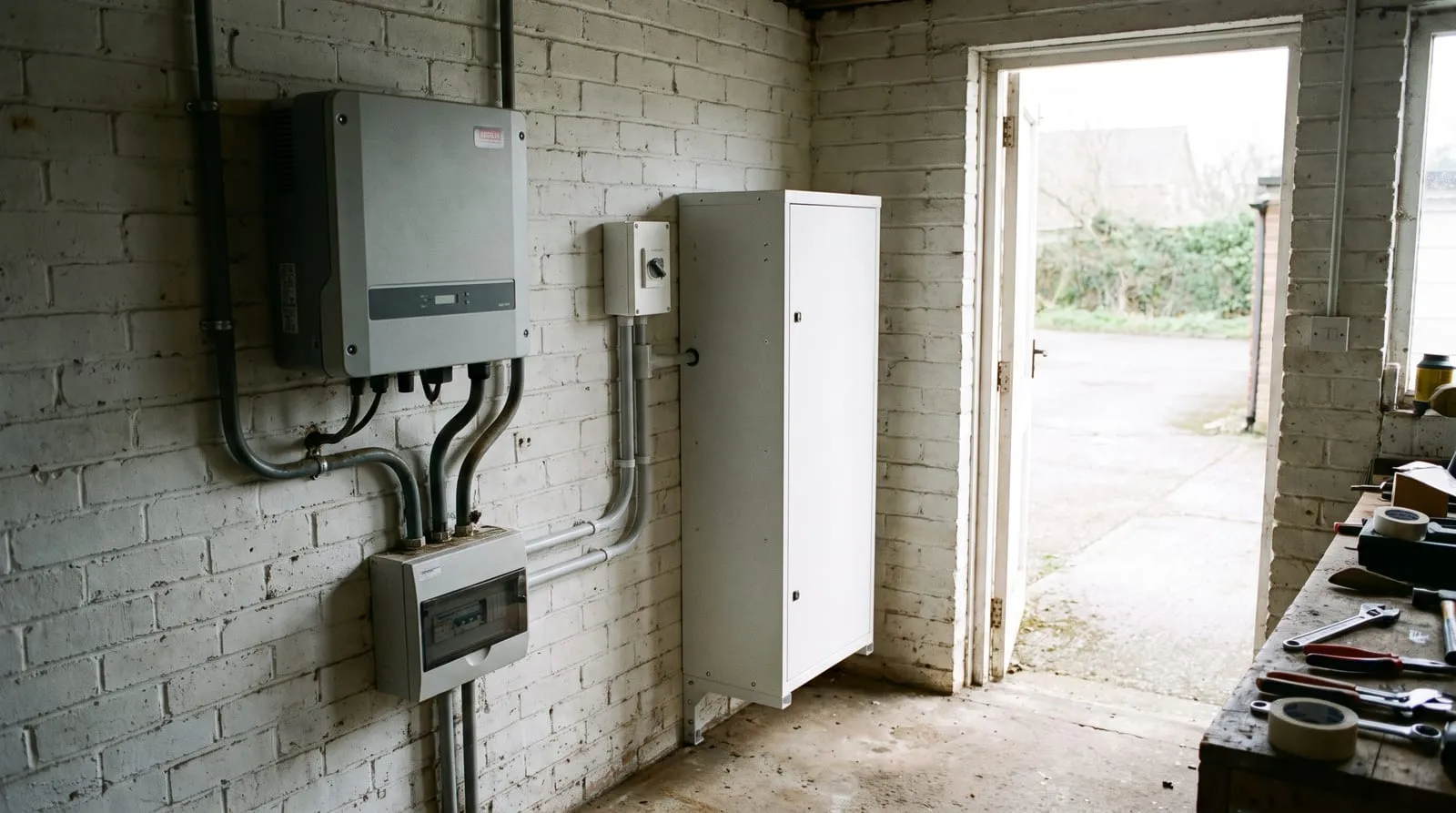
- Check your inverter. Some solar inverters (particularly hybrid ones) already have a battery connection built in, so adding storage is then a case of fitting the battery and commissioning it. Standard string inverters without that capability need either a compatible AC-coupled battery (which has its own small inverter built in and connects independently to your consumer unit) or an inverter swap.
- Size the battery to your generation and usage, not just to what’s cheapest. A 4kWp system generating more than you use on summer days benefits from a decent-sized battery (10 kWh+) to actually capture that surplus; a smaller system might be well served by 5 kWh.
- Fit and commission, typically in a day. No roof work is needed: the battery sits in a garage, utility room or outbuilding, and the electrical work connects it into your existing setup.
- Reconfigure your export/import meter settings if needed, and switch to a tariff that rewards the new setup if you’re not already on one.
What it costs
Retrofitting is generally cheaper than adding a battery as part of a new solar install, because there’s no panel or scaffolding cost. Exact pricing depends on battery size and whether an inverter swap is needed, but as a reference point, our indicative packages for a 10 kWh battery alongside new panels start from around £6,500 for 6 panels and £7,770 for 12. A retrofit onto panels you already own typically comes in below the battery-only portion of those figures once inverter compatibility is confirmed. We’ll always give you an exact price after checking what’s currently on your roof and in your consumer unit.
What changes once it’s fitted
Before a battery, a solar-only home typically self-consumes around a third of what it generates, and the rest goes to the grid. Add appropriately sized storage and that jumps to 70–80%+, because the battery holds onto midday surplus and releases it through the evening peak instead of letting it leave the property for a fraction of its value. On a system that’s been quietly exporting most of its output for years, that’s often the biggest single upgrade available.
Stackable systems mean you’re not locked into one size either: most of the batteries we install (FoxESS, Sigenergy’s SigenStor, Tesla Powerwall) can be added to in modules, so you can start at 5 kWh and expand later if your usage grows.
Things worth checking before you commit
- Warranty implications: some panel or inverter warranties have conditions around third-party additions; we check this as standard, but it’s worth asking whoever installed your original system too.
- Consumer unit capacity: occasionally an older consumer unit needs a minor upgrade alongside the battery. This is usually straightforward and gets flagged during survey, not discovered mid-install.
- MCS documentation: a retrofit still needs to be MCS-certified to remain eligible for things like the Smart Export Guarantee, so make sure whoever fits it is accredited.
Is it worth it?
For most households with solar panels and no storage, yes. You’ve already paid for the generation, and a battery just stops most of it leaking away at export rates instead of being used at the price you’d otherwise pay the grid. Typical payback on the battery addition alone tends to land in a similar 5–8 year window to a full system, often faster if your export rate is low.
If you’ve got panels sitting on your roof with no battery behind them, it’s worth getting them looked at properly rather than guessing. Our free, no-obligation survey checks your existing inverter, roof and consumer unit and comes back with an exact retrofit price and sizing recommendation: no pressure, just the numbers for your specific setup.
Want to know if this is right for your home?
Our design proposals are free and carry no obligation. We cover all of England.
Get a free quote today