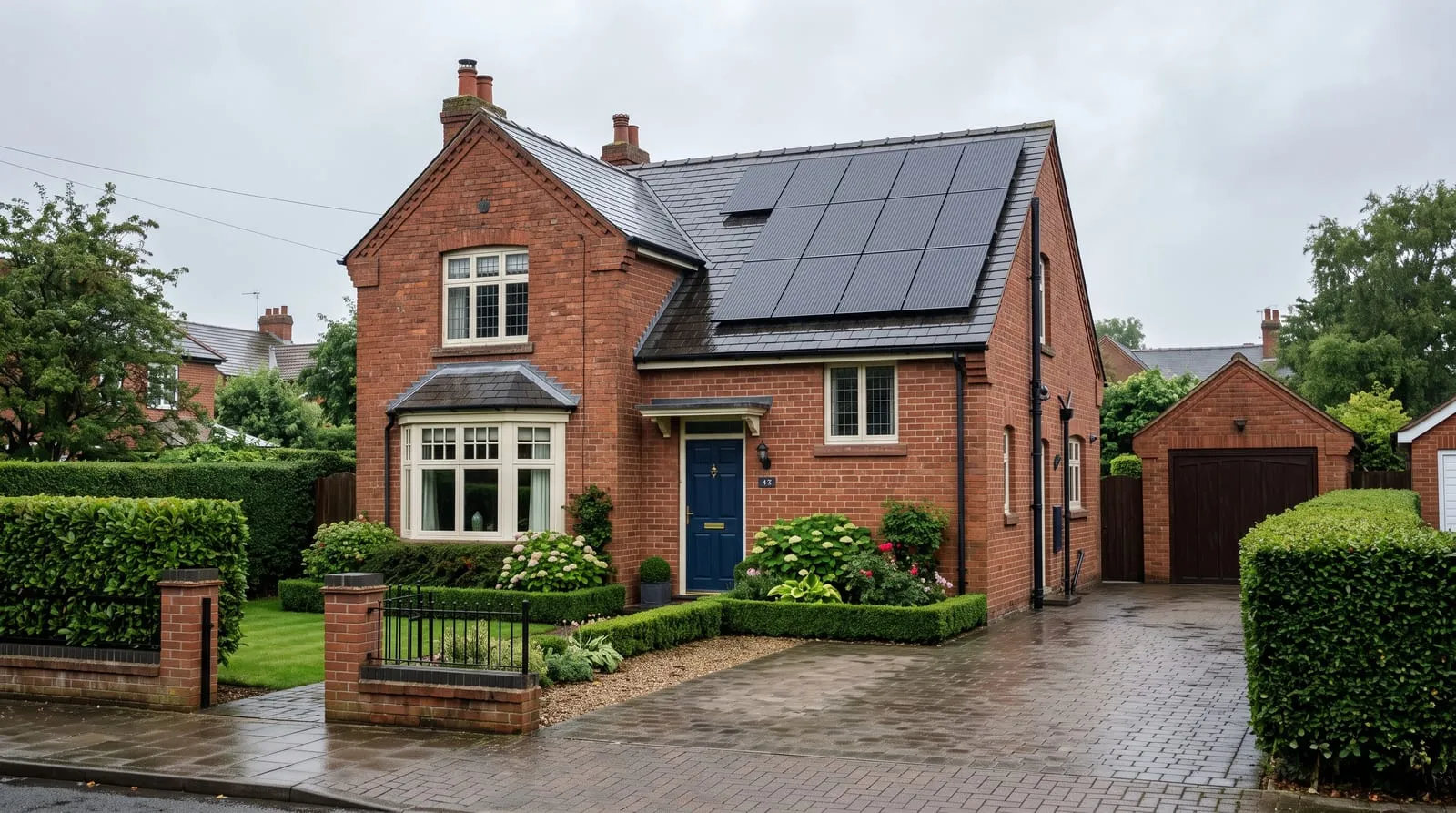
EPC ratings, buyer expectations and sale prices: what solar panels, batteries and heat pumps actually do to your home's value in 2026.
Solar panels pay you twice: once through the bills they cut, and again when you sell. The second payment is less talked about, so here’s what the evidence supports.
The EPC effect is the concrete one
Energy performance certificates matter more every year, to buyers comparing running costs, to mortgage lenders offering better rates on efficient homes, and to landlords facing minimum-rating rules. Solar PV is one of the most effective single upgrades for an EPC score, typically lifting a home a band (or close to it). A battery and heat pump push further. Higher bands correlate with measurably higher sale prices: studies repeatedly put the premium for moving from band D to band B in the region of 5–10% depending on area.
Buyers now read bills, not just bedrooms
Since 2022, running costs have become a first-page question for house hunters. A home with £40 summer electricity bills and a heating system immune to gas price shocks is an easier sell than the identical house next door without them. Estate agents in commuter belts (south Manchester, Cheshire, the Wirral) increasingly list solar and battery systems as headline features rather than footnotes.
Owned systems add value; leased ones complicate it
One important caveat from the industry’s early days: roof-lease arrangements (where a third party owned the panels under the old feed-in tariff) genuinely did complicate conveyancing, and stories from that era still circulate. A system you own outright, which is everything we install, carries no such baggage. It transfers with the house like a new kitchen, with MCS certification and warranties passing to the buyer.
What survives the survey
Buyers’ surveyors check installation quality. MCS certification, proper DNO registration, electrical certificates and transferable warranties are what make a solar system an asset on paper rather than a question mark. Keep the handover pack we give you: it’s part of your home’s paperwork now.
The realistic summary
Don’t install solar only to sell; install it because it cuts your bills with a 5–8 year payback, and treat the value uplift and faster sale as the bonus that makes the maths even better. If a move is on your horizon, mention it in your free survey: it sometimes shapes what system size makes sense.
Want to know if this is right for your home?
Our design proposals are free and carry no obligation. We cover all of England.
Get a free quote today